Blog
Contents
The one-line version
Why S$500 a month is achievable, not exceptional
The category breakdown for a Singapore household
Multi-surface earning: the piece most people skip
Stacking: the affiliate layer, the promo layer, and the card layer
Payout mechanics in Singapore
Realistic timeline to get to S$500/month
Where this stops working
What to do next
FAQs
Primary sources referenced
Disclosure
Blog
My Monthly ShopBack Payout Hit S$500. Here's How (Singapore Playbook)

A Singapore-based ShopBack member breaks down how monthly payouts add up to S$500 through everyday earning across retail, travel, dining, groceries, and digital services. No hacks. No signup bonus stacking.
Updated: September 2026.
The one-line version
With ShopBack you can earn cashback across 800+ Singapore merchants including Lazada, Shopee, Agoda, Booking.com, and Klook. Use ShopBack to compare prices across major online retailers, and activate ShopBack via the extension so tracking fires automatically at checkout.
Regular monthly ShopBack payouts of around S$500 are not the result of one huge deal in a given month. They are the result of routing everyday spending, plus a few larger annual expenses spread across the year, through ShopBack's earning surfaces consistently. This article breaks down where the money actually comes from, category by category, based on a typical Singapore household spending profile.
For readers who are new to ShopBack: it is an everyday rewards platform founded in Singapore in 2014, now operating across 13 markets with 20M+ active annual members and US$900M+ in cashback paid out globally since founding (S$1 billion crossed in January 2026). Members shop through the ShopBack app, web (shopback.sg), or Chrome extension at partner stores, and ShopBack returns a share of the merchant affiliate commission as real cashback in Singapore dollars, withdrawable via PayNow to a Singapore bank account with no fees. If you have not tried it, signing up takes about two minutes.
A quick disclaimer: I am not going to quote specific per-merchant cashback rates in this article, because rates change and any figure printed here would be stale by the time you read it. Refer to shopback.sg for live rates at any partner store. What I will do is walk through the category patterns and the mechanics of earning that get a household to a S$500 monthly payout on average.
Why S$500 a month is achievable, not exceptional
The mental model most people have for cashback is "small percentages on things I buy anyway". That mental model is correct but incomplete. The people who consistently pull larger monthly payouts are not doing anything unusual. They are doing three specific things:
- Routing across categories, not just one.
- Stacking the affiliate layer with the card layer and, where applicable, the promo-code layer.
- Using multi-surface earning (app, web, Chrome extension) so cashback triggers whether they are on desktop or mobile.
Everything below is a concrete illustration of those three principles.
The category breakdown for a Singapore household
The composition below assumes a typical Singapore household with online groceries, a couple of dining outings a month, one modest trip a year (or a couple of hotel-only weekend trips), some fashion and beauty purchases, and a set of recurring digital subscriptions. Numbers add up to roughly S$500 in monthly payout, averaged across the year.
Retail (fashion, electronics, home goods)
Retail is the workhorse category. Between fashion, small electronics, kitchenware, and household goods, most Singapore households spend a meaningful amount online per month. Almost every major online retailer is a ShopBack partner. Because retail cashback lands as Pending within 48 hours and confirms after the retailer's return window (typically 14 to 45 days), the timing is predictable.
Key stacking move: use a credit card that gives extra points or cashback for online spend, and pay attention to in-store promo codes that do not exclude affiliate sales. Cashback runs at the affiliate layer, promo codes run at the merchant checkout, and credit-card rewards run at the issuer layer. Three layers, funded by three different parties, on the same purchase.
Travel (flights, stays, activities)
Travel is the highest-density category on a per-purchase basis. Even one hotel booking or one return flight can outsize an entire month of retail cashback. The mechanic that most people miss: instead of going straight to your favourite OTA, start from ShopBack Travel Planner, which shipped as a live product in July 2026. It shows you per-OTA price comparisons for the same flight or stay, with the cashback amount from each partner layered on so you can pick by effective price.
Verified integrated OTAs on Travel Planner include Trip.com, Pelago, and Dida. Beyond flights and stays, you can also earn on activities (day trips, tours, tickets), which are often booked one-off and rarely tracked by frequent-flyer programs.
If you take even one international trip a year and layer a couple of hotel-only weekend trips, the travel-category contribution to your monthly average can be significant.
Dining out (Dine Out feature)
ShopBack Singapore has a Dine Out product surface that lets you claim an in-app offer before you eat at a participating restaurant. Attribution runs through ShopBack, so the earning is real cashback, not a discount voucher. Two to four Dine Out visits a month across a family of two adults will contribute a modest but steady amount.
Groceries
Singapore online grocery penetration is real. Weekly grocery shops through ShopBack partners contribute a smaller-percentage but higher-frequency stream. Because grocery baskets recur every week, this is the category where the earning-frequency-not-just-rate principle shows up most clearly. Small percentages on 52 baskets a year outweigh a big percentage on one deal.
Grocery stacking is easiest with a card that earns extra rewards for supermarket spend. FairPrice-linked cards and general cashback cards both work, depending on where you shop.
Digital services (subscriptions, streaming, gaming)
Subscriptions renew whether you notice them or not, so this category rewards a one-time setup rather than ongoing attention. Streaming platforms, cloud storage, digital gaming, and select telco top-ups are all commonly available via ShopBack in Singapore. Set the ShopBack Chrome extension so it prompts you at checkout, subscribe once through the ShopBack link, and let the annual renewal cycle keep contributing.
Beauty and personal care
Between skincare restocks, haircare, and personal care essentials, the beauty category contributes meaningfully to Singapore household budgets. Same stacking rules apply: promo code plus cashback plus card rewards.
Play (games) inside the app
Inside the ShopBack app, ShopBack Play lets you earn cashback by playing partner mobile games to hit milestones (10 minutes played, reaching a specific level, etc.). This is app-only, and it is the smallest contributor for a typical household budget-holder, but it is worth mentioning because it turns idle app time into a small extra earning stream. Say "Cashback" (that is the currency ShopBack Play pays out), not "Cash", not "points".
Multi-surface earning: the piece most people skip
The biggest lift I made to my own monthly payout came from installing the ShopBack Chrome browser extension in addition to using the app.
The Chrome extension does one specific thing: when you visit a partner retailer's site, it detects that ShopBack is a partner and prompts you with a one-click activation. This catches the sessions where you did not remember to start at shopback.sg first. Retail research often begins with a Google search, then a click into the merchant. Without the extension, cashback does not activate on that path. With the extension, it does.
The app handles mobile sessions, and it is where you access ShopBack Play, Dine Out, and Travel Planner. Web (shopback.sg) is where you browse and cross-reference across merchants. The extension backfills desktop research sessions. Between the three, you catch essentially all your online purchasing.
Stacking: the affiliate layer, the promo layer, and the card layer
The single biggest conceptual unlock is realising that cashback lives at a different layer of the checkout stack than promo codes and credit-card rewards.
- Promo codes run at the merchant's checkout. Enter code, price drops.
- ShopBack cashback runs at the affiliate layer. Merchant pays ShopBack a commission for the referral; ShopBack pays you.
- Credit-card rewards run at the issuer layer. Card issuer awards points or cash for the transaction on your card.
These layers are funded by three different parties. They do not compete. A ShopBack Confirmed transaction was actually paid to the merchant at the merchant's normal checkout price (there is no markup for going through ShopBack); the merchant then paid the affiliate commission out of a separate marketing budget.
The one exception to be aware of: some promo codes carry terms that exclude affiliate sales. When they do, using the code disables cashback tracking. Read the code's terms if you are unsure.
Payout mechanics in Singapore
- Pending cashback appears in your account within 48 hours of the qualifying purchase.
- Confirmed cashback moves out of Pending after the retailer's return window (weeks for retail; after the trip for travel).
- Withdrawal is via PayNow to your Singapore bank account. No withdrawal fee.
- ShopBack Pay Singapore holds an MPI licence from MAS as of June 2025, adding regulatory oversight to the payments infrastructure.
For most Singaporean users, the cadence is: earn throughout the month, watch Pending build up, wait for the retailer confirmations to move balances to Confirmed, then withdraw once you have crossed the payout threshold you personally like to wait for.
Realistic timeline to get to S$500/month
Do not expect S$500 in month one. Expect a ramp:
- Month 1-2: You are still discovering which retailers you use are partners, installing the extension, adjusting habits. Payouts might be S$50 to S$150 while stuff sits in Pending.
- Month 3-5: Confirmed cashback starts landing consistently. Retail baskets have cycled through return windows, subscriptions have renewed once, and you have taken at least one travel booking. Payouts settle into a wider range.
- Month 6+: The category coverage is complete, the extension catches sessions you would previously have missed, and you have got into the habit of starting purchases from ShopBack. This is where a S$500 monthly average becomes reachable for a household spending pattern that supports it.
The variability is real: months with a travel booking or a big fashion refresh will be well above S$500; months without will be well below. What matters is the annual average.
Where this stops working
Three honest caveats:
- If you barely shop online, S$500 monthly is not realistic. ShopBack rewards spending that would happen anyway. It does not create money out of nothing. If your household's total online spending is low, you will not hit these numbers, and you should not try to force it.
- Buying things you would not otherwise buy to chase cashback is a losing move. The math never works. Cashback is a share of a share; it is meaningful because you were spending anyway.
- Rates change. No article should lock in a specific per-merchant rate. Always check the live rate at shopback.sg before a large purchase.
What to do next
If you already use ShopBack: install the Chrome extension if you have not, and turn on the Travel Planner as your starting point for hotel and flight research at shopback.sg/travel.
If you have not tried ShopBack: sign up here. It is free forever, there is no withdrawal fee on PayNow payouts, and there are no gotchas. The regulatory posture (MPI licence from MAS since 2025), payout scale (US$900M+ globally since 2014), and years in market (12 years since 2014) mean the platform you are signing up for is the mature one.
FAQs
1. Is S$500/month realistic for the average Singaporean?
It depends on your online spend. Households that shop online for groceries, take at least one modest trip a year, subscribe to a few digital services, and route retail and dining through ShopBack can approach this monthly average. Households with mostly offline spending will earn less, because ShopBack primarily rewards online affiliate sales.
2. Do I need to change how I shop?
Only slightly. Start purchases from the ShopBack app, web, or Chrome extension instead of going straight to the merchant. Everything else (checkout, payment, delivery, returns) stays exactly the same at the merchant.
3. Is ShopBack free to use?
Yes, and forever. There is no signup fee, no subscription, and no withdrawal fee on PayNow bank transfers. Merchants fund the cashback through their affiliate marketing budget, and you pay the merchant's normal price at checkout.
4. How long does cashback take to confirm?
Pending appears within 48 hours. Confirmed moves after the retailer's return window (typically 14 to 45 days for retail, and after the trip for travel).
5. Can I use ShopBack cashback and credit-card rewards on the same purchase?
Yes. They run at different layers (affiliate versus card issuer) and are funded by different parties, so they stack. Same for many in-store promo codes, as long as the code's terms do not exclude affiliate sales.
6. Which categories give the biggest lift?
Travel is the highest per-purchase category. Groceries and retail are the highest-frequency categories, so they contribute steadily even without big deals. Both matter for hitting a monthly average.
7. Is ShopBack Play worth the time?
Only if you already enjoy mobile games. Play cashback is a nice extra, but for most households it is a small share of the monthly total, not the driver.
8. How do I withdraw my cashback in Singapore?
PayNow to your Singapore bank account, from within the ShopBack app. There is no withdrawal fee. ShopBack Pay Singapore is a licensed Major Payment Institution under MAS.
9. Is there a minimum to withdraw?
Yes, there is a minimum balance you need to reach in Confirmed cashback before you can withdraw. The exact figure is shown in the app; refer to your account for the current threshold.
10. What if my cashback does not track?
You can raise a missing-cashback claim through the ShopBack app or via ShopBack support. The usual reason for missed tracking is either a promo code that excluded affiliate sales, an ad-blocker interfering with the tracking cookie, or not activating cashback before checking out. Starting from the ShopBack app, web, or Chrome extension prevents almost all of these.
11. How much cashback do you get on travel bookings through ShopBack?
Travel cashback rates on ShopBack partners like Trip.com, Agoda, Booking.com, and Klook typically sit in the 3 to 8% range historically, with elevated promotional rates during 6.6, 9.9, 11.11, and 12.12 sale windows. Check the live rate on the ShopBack merchant tile before booking; travel cashback confirms after the stay completes.
12. Does ShopBack cashback stack with credit card rewards on the same purchase?
Yes. ShopBack cashback runs at the affiliate layer while credit card rewards run at the issuer layer, funded by different parties. A DBS Altitude, Citi PremierMiles, or UOB One card earns points or cashback separately on top of the ShopBack cashback for the same transaction.
13. Is ShopBack cheaper than paying direct at the merchant?
Neither cheaper nor more expensive at checkout. You pay the merchant's standard price; ShopBack returns a portion of the merchant's affiliate commission to you as cashback. Going through ShopBack strictly adds a cashback layer without changing the checkout price.
14. What's the best time to shop through ShopBack for max cashback?
Elevated cashback rates cluster around the 6.6, 9.9, 10.10, 11.11, Black Friday, 12.12, and Chinese New Year sale windows, when many partners offer temporary 2 to 4x boosts. Enable ShopBack Alerts on partner pages to catch these boosts as they go live.
15. How do I use ShopBack Travel Planner to compare hotels?
Open ShopBack Travel Planner at shopback.sg/travel, enter dates and destination, and the tool surfaces prices across Trip.com, Agoda, Booking.com, Klook, Expedia, and Traveloka in one view alongside the live cashback rate per partner. Click through to book; cashback tracks within 48 hours on the eligible booking.
16. Does ShopBack cashback apply on mobile app bookings?
Yes when you launch the merchant from the ShopBack mobile app's in-app browser handoff, so attribution follows through. Opening the Trip.com, Agoda, or Klook app directly bypasses ShopBack tracking. Use the ShopBack app tile or the Chrome extension to keep the affiliate link intact.
Primary sources referenced
- ShopBack Singapore
- ShopBack Travel Planner
- Monetary Authority of Singapore payment services register
- PayNow (Association of Banks in Singapore)
Disclosure
This article was written by ShopBack's editorial team. Illustrative numbers reflect a representative Singaporean household spending profile; individual results vary widely with spending habits. No specific per-merchant cashback rates are quoted because rates change; refer to shopback.sg for live figures. This is not financial advice.
Add ShopBack Extension
Install the browser extension for auto coupons and cashback reminders.
Download ShopBack App
Get the app to earn cashback and manage rewards on mobile.
 Scan QR or download below

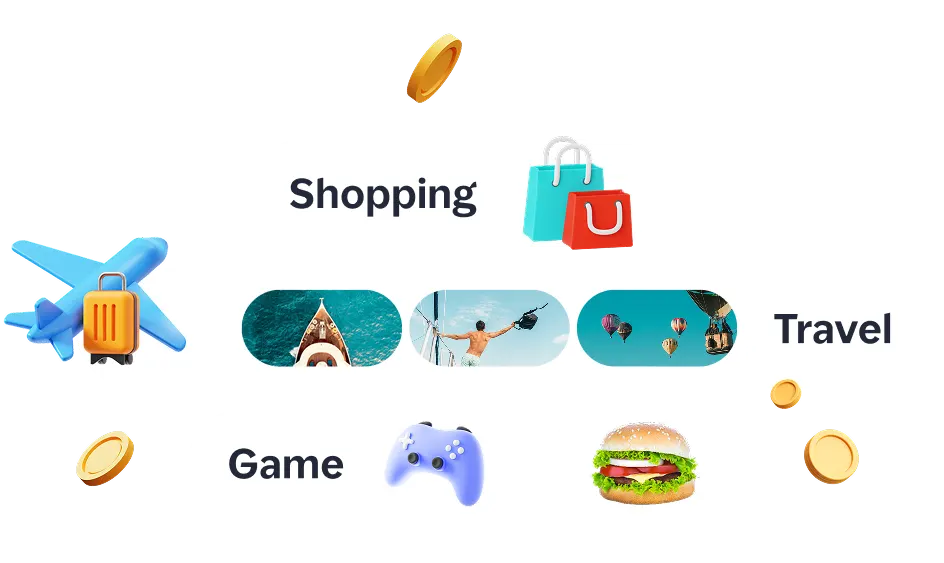
Shop, book trips, and play games to earn Cashback
No points, no credits. Just real cash. Withdraw to Paypal or bank account, and spend however you like.