Blog
Is It Worth Overpaying Your HDB Loan to Save on Interest?

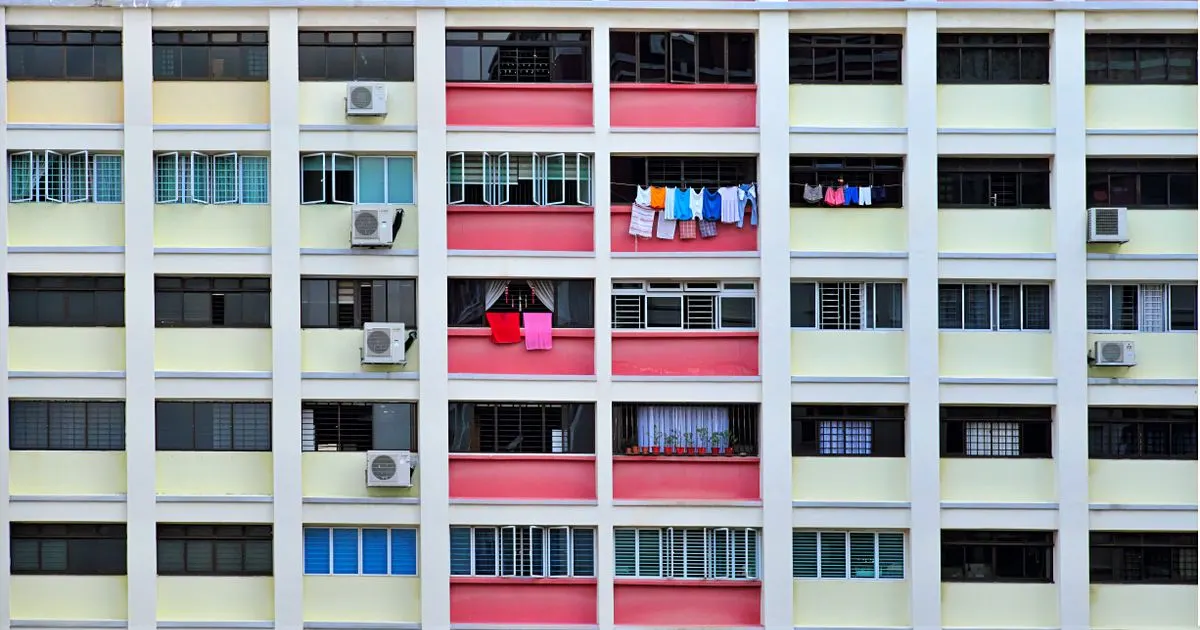
HDB concessionary loan rate is 2.6% p.a. CPF OA earns 2.5%. The spread is just 0.1%, which means overpaying your HDB loan almost never makes mathematical sense, unless you're close to retirement or have no investments.
Sitting on a chunk of cash or a healthy CPF balance, the instinct is to throw it at the housing loan and kill the debt faster. It feels responsible. But with the HDB rate and your CPF OA rate almost touching, the maths behind that instinct is far weaker than it looks. Here's what overpaying really earns you.
The verdict
For most Singaporeans with an HDB concessionary loan, overpaying is not worth it. The HDB rate is 2.6% p.a. (HDB) and CPF OA earns 2.5% (CPF Board), a net spread of just 0.1%. Using cash to overpay is even less justified when that cash could be invested in equities or a high-yield savings account earning 3 to 4%+. The only scenarios where early repayment makes sense: you are approaching 55 and want to clear the loan before CPF retirement drawdowns begin, or you are psychologically burdened by the debt and have no better investment outlet for the money.
💡 Make your cash work harder between instalments, earn cashback on spending with ShopBack
Where the insurer or lender participates on ShopBack, start at ShopBack before you click through so cashback tracking fires, and check ShopBack when you renew for any layered promo.
Use ShopBack to compare insurer or lender options on eligible merchants, activate ShopBack via the extension before you click through so tracking fires, and check ShopBack when you renew for any layered promo.
The 0.1% spread, explained
The core logic is the 0.1% Spread Rule: your HDB loan costs you 2.6% p.a., the concessionary rate is pegged at 0.1% above the prevailing CPF OA rate (HDB). Your CPF OA earns 2.5% p.a. (CPF Board). Using CPF to overpay your loan saves you 2.6% on the repaid principal but gives up the 2.5% your money would keep earning in CPF, a net benefit of 0.1% per year. On a $50,000 lump repayment, that's $50/year.
Using cash to overpay is worse: that cash could sit in a HYSA earning 3.5 to 4% p.a., meaning you are giving up 0.9 to 1.4% net by accelerating HDB repayment instead.
The only rate environment where overpayment clearly wins is if CPF OA rates dropped below 2.0% or HDB rates rose to 3.5%+. Neither has happened yet, because the HDB rate moves in lockstep 0.1% above the OA rate, the spread stays fixed at 0.1% whenever the OA rate sits at its 2.5% floor.
The numbers across four scenarios
| Scenario | Action | Annual Gain/Cost on $50,000 | Net Verdict |
|---|---|---|---|
| Use CPF OA to overpay HDB loan | Save 2.6%, lose 2.5% CPF interest | +$50/year | Marginally positive, not worth admin |
| Keep CPF in OA, invest surplus cash in HYSA | Earn 3.8% on cash instead of overpaying | +$600/year vs overpayment | Clear win for HYSA |
| Use cash to fully overpay HDB in year 10 | Save remaining interest (est. $18K) | Depends on remaining tenure | Worse than investing at 4%+ over same period |
| Approaching 55, clear HDB to free CPF for retirement | Loan cleared, CPF OA unlocked | Depends on SA/RA balance | Justifiable for retirement planning |
The numbers show that overpaying your HDB loan with cash is inferior to keeping that cash in a high-interest savings account in virtually every realistic scenario in 2026.
When overpaying makes sense (and when it doesn't)
Use partial repayment when your remaining loan tenure is under 5 years and you want a clean balance sheet before selling or retiring. Avoid overpayment when you have high-interest debt elsewhere, no emergency fund, or you are more than 10 years from 55.
| Scenario | Overpay HDB? | Better Use of Money |
|---|---|---|
| Age <45, 20+ years to retirement | No | HYSA, SRS investments, equities |
| Age 50 to 54, planning CPF at 55 | Yes | Clears loan before drawdown age |
| Have credit card debt at 26% p.a. | No | Pay off credit card debt first |
| Cash sitting in 0.05% savings account | Borderline | Move cash to HYSA first |
| No emergency fund | No | Build 4 to 6 months emergency fund first |
What this means for your money
In practice, this means a 38-year-old with 20 years left on a $300,000 HDB loan should not rush to overpay. The total remaining interest at 2.6% is roughly $84,000 over 20 years. But $50,000 invested at 4% p.a. for 20 years compounds to $109,556, more than the interest saved and with no liquidity sacrifice.
The trade-off is: overpaying saves you interest (certain, small) vs investing your surplus for returns above the loan rate grows your wealth (probabilistic, historically higher). For most people under 50 in Singapore with access to CPF SA compounding at 4% and equity markets, overpaying the HDB loan is the least efficient use of surplus funds.
When this does NOT apply
- You are approaching 55 and want your CPF OA freed up: CPF OA funds used for housing must be returned to your OA with accrued interest when you sell or at 55. Clearing the loan early reduces the notional debt owed back to CPF and simplifies your retirement calculations.
- You are selling your flat within 5 years: Reducing outstanding principal before sale lowers the amount you need to return to CPF OA (principal + the accrued interest you would have earned at 2.5% p.a., CPF Board), which directly affects your cash proceeds at completion.
- You have no other investment discipline: If the alternative to overpaying is spending the money, then overpaying is better than nothing, it forces saving and eliminates the loan faster.
- Your loan is a bank loan at 4%+ p.a.: This article covers the HDB concessionary loan at 2.6%. Bank loan holders face a different calculus over a 25-year horizon, at 4 to 5% p.a., early repayment may well beat keeping cash in a HYSA at 3.5 to 4%.
Frequently asked questions
What happens to CPF OA funds used for HDB repayment if I sell the flat?
They are returned to your CPF OA, together with the accrued interest you would have earned had the savings stayed in your OA (currently 2.5% p.a., compounded annually), this principal-plus-accrued-interest refund is required by CPF (CPF Board). You do not pocket the CPF portion of the sale proceeds in cash, it goes back into your OA and is subject to CPF withdrawal rules.
Should I use my annual bonus to overpay my HDB loan?
Probably not, a $10,000 bonus overpayment on a 2.6% loan saves you $260/year. The same $10,000 in OCBC 360 or UOB One at 4% earns $400/year, and you retain full liquidity. Invest the bonus unless you're within 5 years of clearing the loan anyway.
Does HDB charge any fee for partial capital repayment?
No, HDB does not charge prepayment penalties on the concessionary loan, and there is no lock-in period or administrative fee for partial capital repayment (HDB). You can make partial repayments anytime at no cost, which is one advantage of HDB loans over some bank loans that impose lock-in periods with penalties.
How does ShopBack help Singapore HDB owners save more on the household spend that funds early repayment or HYSA contributions?
ShopBack Singapore trims the variable household spend that competes with early HDB repayment or HYSA top-ups by paying cashback on the same essentials you already buy every month. Route orders fresh from the ShopBack app or FairPrice Online, Amazon SG, Lazada, Shopee, and Watsons for groceries, pantry, appliances, and personal care, then withdraw confirmed cashback via PayNow to the same UOB One or OCBC 360 HYSA that holds the surplus you would otherwise consider throwing at the loan. A household routing S$1,000 to S$2,000 of monthly essentials through ShopBack can compound a meaningful additional yield on top of the 3.5 to 4 percent HYSA return. Confirm the live cashback rate on each merchant page before every basket because rates rotate with campaign windows.
Key takeaways
- If your HDB rate is 2.6% and CPF OA earns 2.5%, the net benefit of overpaying with CPF is $0.10 per dollar per year, not worth it at scale.
- If you have surplus cash, put it in a HYSA (3.5 to 4% p.a.) rather than overpaying the loan; you earn more and keep liquidity.
- If you are approaching 55 or planning to sell, overpaying makes sense to simplify your CPF accrued interest obligations.
- If you have any debt above 4% p.a., credit cards, renovation loans, clear those before touching the HDB loan principal.
💡 Build your savings buffer faster with ShopBack cashback on everyday spending
Sources
- HDB, HDB housing loan interest rate (concessionary rate pegged at CPF OA rate + 0.1% = 2.6%) (accessed 2026-06-05)
- HDB, Payment (partial capital repayment minimums, no penalty or lock-in) (accessed 2026-06-05)
- CPF Board, Earning attractive interest (CPF Ordinary Account 2.5%) (accessed 2026-06-05)
- CPF Board, Why do I need to refund the accrued interest on CPF savings used for my property (accessed 2026-06-05)
- CPF Board, CPF refund when selling or transferring property (principal + accrued interest) (accessed 2026-06-05)
Disclaimer
The views and recommendations expressed in this article are those of the author.
Loan rates, CPF interest rates, and housing policies are subject to change. Please verify details directly with HDB and CPF Board before making decisions.
This article is intended for general informational purposes only and should not be considered professional, financial, or mortgage advice.
Brands, work with us: [email protected].
Add ShopBack Extension
Install the browser extension for auto coupons and cashback reminders.
Download ShopBack App
Get the app to earn cashback and manage rewards on mobile.
 Scan QR or download below

Related articles
HDB BTO vs Resale vs EC: Real Cost Comparison for First-Time Buyers
BTO is cheaper upfront but takes 4-6 years to collect. Resale is immediate but costs $100,000-$300,000 more. EC sits in between with private condo finishes at HDB-adjacent prices. Here's the real cost comparison across all three for 2026.
HDB Loan vs Bank Loan: Real Cost Difference Over 25 Years
HDB concessionary loan at 2.6% p.a. vs bank loan at 3.5 to 5% p.a. Over 25 years on a $400,000 loan, the difference in total interest paid is $50,000 to $130,000. The right choice depends on your risk tolerance, not just the rate.
Groceries in Singapore: FairPrice vs Sheng Siong vs Cold Storage, Where Do You Actually Save?
A monthly grocery basket of S$400 to S$500 costs S$20 to S$60 more at Cold Storage vs FairPrice. Sheng Siong is the cheapest for staples but has limited range. The right strategy isn't loyalty to one store, it's knowing which to use for which category.
Shop, book trips, and play games to earn Cashback
No points, no credits. Just real cash. Withdraw to Paypal or bank account, and spend however you like.