Blog
Contents
The verdict
Sensor, resolution, and image quality
The numbers, spec by spec
Merchant callouts
Weight and packing for 14 days in Japan
Video capabilities compared
Autofocus and subject tracking
Ergonomics and controls
When each camera is the wrong pick
When this does NOT apply
Frequently asked questions
Key takeaways
Disclaimer
Blog
Sony A7 IV vs Canon R6 Mark II vs Fujifilm X-T5: Travel Camera SG 2026
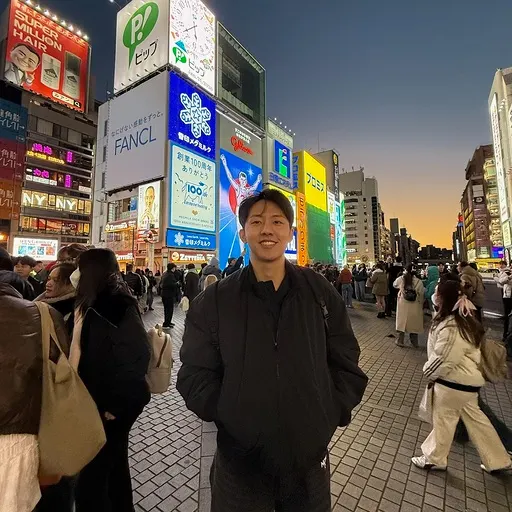
Sony A7 IV vs Canon EOS R6 Mark II vs Fujifilm X-T5 for the Singapore traveller: price, weight, battery, low-light, video, and which suits a 14-day Japan trip.
SGD 3,499 for the Sony A7 IV body, SGD 3,799 for the Canon R6 Mark II, SGD 2,499 for the Fujifilm X-T5, the three-way price ladder at Singapore's SLR Revolution and Alan Photo sits within SGD 1,300 but weight for a 14-day Japan trip swings 350 grams, and the right pick depends less on sensor spec sheets than on whether you shoot handheld night in Kyoto, video for Instagram Reels, or capsule daylight-only through Arashiyama bamboo and Meiji Shrine.
The verdict
For a Singapore-based traveller in 2026 planning a 14-day Japan trip with mixed daylight streets, indoor izakaya scenes, and some Kyoto night photography, no single camera wins outright. The Fujifilm X-T5 at SGD 2,499 body-only is the best pick for weight and daylight files, with the 40 megapixel X-Trans APS-C sensor delivering resolution and Fujifilm's colour science that requires minimal post. The Sony Alpha 7 IV at SGD 3,499 body-only is the best pick for hybrid photo and video use with the deepest third-party lens ecosystem and best value in the E-mount ecosystem over 3-year ownership. The Canon EOS R6 Mark II at SGD 3,799 body-only is the best pick for low-light Kyoto night, action, and wildlife with class-leading autofocus and clean high-ISO output up to ISO 12,800.
The right pick for the 14-day Japan traveller comes down to what dominates the shot list: daylight streetscapes and portraits (X-T5 wins), hybrid photo and Reels (A7 IV), night and low-light (R6 Mark II). Weight matters: the X-T5 kit at 1.1 kg body plus lens versus the R6 Mark II kit at 1.6 kg is a real difference over 14 days of walking. Grey market pricing at SLR Revolution and Alan Photo runs SGD 200 to SGD 400 below AD across all three, at the cost of manufacturer regional warranty.
ShopBack utility. Use ShopBack to compare cashback rates across the options in this guide before you commit, and activate ShopBack via the extension or app so the cashback tracks on whichever merchant wins for your basket.
💡 Earn cashback on electronics at ShopBack Lens accessories, memory cards, filters, and bags at partner merchants.
Sensor, resolution, and image quality
The three cameras use meaningfully different sensor formats which drive real differences in output.
Sony A7 IV: 33 megapixel back-illuminated full frame
The Sony A7 IV uses a 33 megapixel back-illuminated CMOS full frame sensor, striking a balance between resolution and low-light performance. Full frame sensors have roughly 2.3 times the surface area of APS-C sensors at the same resolution, which translates to about 1 stop of low-light advantage at equivalent focal lengths. The 33 megapixel resolution gives comfortable cropping headroom for travel photography where you may not always have the ideal focal length. Raw files at ISO 100 exhibit strong dynamic range, with usable shadow recovery of 4 to 5 stops in Capture One and Lightroom.
Auto white balance and Sony's colour science have historically been the weakest point relative to Fujifilm and Canon in the mirrorless full-frame category, though Sony's colour has improved substantially since the A7 III generation. For most travel scenes shot in raw and post-processed, the sensor delivers professional-grade output that competes with cameras twice the price.
Canon EOS R6 Mark II: 24.2 megapixel full frame optimised for speed
The Canon EOS R6 Mark II uses a 24.2 megapixel full frame CMOS sensor optimised for continuous autofocus, low-light, and video. The lower pixel count (relative to A7 IV's 33) yields larger individual pixel sites, which is why the R6 Mark II leads in low-light performance among the three. Clean output extends to ISO 12,800, with usable images at ISO 25,600 for scenes where noise reduction is acceptable. Dynamic range is competitive with the A7 IV, though shadow recovery is slightly weaker than Sony at very low ISO.
Canon's colour science is widely regarded as the best-in-class for skin tones and warm colour reproduction. For portrait travel photography and food scenes at izakaya or Kyoto tea houses, the R6 Mark II delivers files that require minimal post-processing to look pleasing. The trade-off is lower resolution: 24 megapixels leaves less crop headroom than 33 or 40 megapixels.
Fujifilm X-T5: 40 megapixel X-Trans APS-C
The Fujifilm X-T5 uses a 40.2 megapixel X-Trans 5 HR APS-C sensor, the highest resolution among the three. APS-C is smaller than full frame, which means less low-light advantage per pixel, but at 40 megapixels the X-T5 delivers per-pixel detail that rivals or exceeds the A7 IV for daylight scenes. Fujifilm's colour science is the strongest asset: the film simulations (Classic Chrome, Provia, Astia, Acros) render straight-from-camera JPEGs that require zero post for social media output.
Low-light performance is the X-T5's relative weakness. Above ISO 6,400 the sensor shows noticeably more noise than the A7 IV or R6 Mark II. For dedicated night photography (Kyoto Gion at 8 pm, Osaka Dotonbori night reflections), the X-T5 requires either a tripod for slower shutter or acceptance of some noise. For daylight and blue-hour, the sensor is exceptional.
The numbers, spec by spec
| Spec | Sony A7 IV | Canon R6 Mark II | Fujifilm X-T5 |
|---|---|---|---|
| Body-only price SG (approx.) | SGD 3,499 | SGD 3,799 | SGD 2,499 |
| Sensor format | Full frame BSI CMOS | Full frame CMOS | APS-C X-Trans 5 HR |
| Resolution | 33.0 megapixel | 24.2 megapixel | 40.2 megapixel |
| ISO range (native) | 100 to 51,200 | 100 to 102,400 | 125 to 12,800 |
| Body weight (with battery) | 658 grams | 670 grams | 557 grams |
| Battery CIPA rating | ~580 shots | ~580 shots | ~580 shots |
| Continuous burst (mechanical) | 10 fps | 12 fps | 15 fps |
| Continuous burst (electronic) | 10 fps | 40 fps | 20 fps |
| Video max | 4K 60p | 4K 60p | 6.2K 30p |
| In-body stabilisation | 5.5 stops | 8 stops | 7 stops |
| Card slots | 1 CFexpress A + 1 SD UHS-II | 2 SD UHS-II | 2 SD UHS-II |
| Lens mount | Sony E | Canon RF | Fujifilm X |
| Third-party lens depth | Deepest | Limited | Broad |
Specifications and pricing as published by each manufacturer and observed at Singapore retailers as of 2026-08-27; verify current specs and pricing directly with SLR Revolution, Alan Photo, Cathay Photo, or the manufacturer regional site before purchase.
The important differentiators: the R6 Mark II has the best electronic burst rate (40 fps) for action and wildlife. The X-T5 has the highest resolution and lowest weight but weakest native ISO ceiling. The A7 IV has the deepest lens ecosystem and competent hybrid capabilities. All three share roughly the same CIPA battery rating.
Merchant callouts
SLR Revolution at Peninsula Plaza and Alan Photo at Peninsula Plaza
SLR Revolution and Alan Photo are Singapore's dominant grey-market camera retailers, both located at Peninsula Plaza on North Bridge Road. Grey market pricing runs SGD 200 to SGD 400 below AD retail on all three cameras: Sony A7 IV around SGD 3,199, Canon R6 Mark II around SGD 3,499, Fujifilm X-T5 around SGD 2,199. The warranty is a limited local warranty issued by the shop (typically 12 months, parts and labour) rather than the manufacturer regional warranty covering all APAC. For a Singapore-based buyer who does not travel internationally with the camera and is comfortable with local service, grey saves meaningfully. Verify current pricing and warranty terms directly with the shop before purchase.
Cathay Photo at Peninsula Plaza and MS Color at Adelphi
Cathay Photo and MS Color are authorised dealers for Sony, Canon, and Fujifilm in Singapore. Prices are at manufacturer suggested retail with the full APAC regional warranty (2 years typical). Value-adds include local service centre relationships, faster body swap in the case of a manufacturing defect, and eligibility for manufacturer cashback promotions and lens rebates when they run. For a Singapore traveller who plans to use the camera abroad or wants the reassurance of manufacturer warranty, AD is the right route. Prices typically SGD 200 to SGD 400 above grey.
Amazon Singapore for accessories
Amazon Singapore is a strong route for memory cards (SanDisk Extreme Pro V60 or V90 UHS-II SD cards, Sony CFexpress Type A for A7 IV), extra batteries (Sony NP-FZ100, Canon LP-E6NH, Fujifilm NP-W235), and camera bags (Peak Design, Wandrd, Lowepro). Shopping via the ShopBack in-app browser or Chrome extension activates cashback tracking at Amazon Singapore, with cashback rates shown on the merchant's ShopBack page and varying by promotional window.
Bic Camera and Yodobashi in Japan
Bic Camera and Yodobashi (Shinjuku, Akihabara, Umeda) are Japan's dominant camera electronics chains. Tourist prices with the 10% consumption tax refund at these retailers are competitive with Singapore grey but not dramatically cheaper on full-frame bodies. On the Fujifilm X-T5 specifically, Japan pricing may run 5 to 10% below Singapore AD after refund; on Sony A7 IV and Canon R6 Mark II, the gap is smaller (2 to 5%). For a Singaporean already on a Japan trip who is confident in the specific body they want, the modest saving plus the fresh experience of buying at a proper camera arcade can justify the Japan buy. For a first-time or uncertain buyer, Singapore is safer.
Weight and packing for 14 days in Japan
The kit weight differential over 14 days of walking Kyoto, Osaka, and Tokyo is where the three cameras diverge in real user experience.
Fujifilm X-T5 kit: X-T5 body 557 grams plus XF 16-55mm f2.8 f2.8 R LM WR 655 grams equals 1.2 kg. Or with the lighter XF 18-55mm f2.8-4 kit lens (310 grams) plus a 35mm f1.4 (187 grams) for indoor, total kit hovers at 1.05 kg. Fits easily in a compact camera bag or the top compartment of a daily backpack.
Sony A7 IV kit: A7 IV body 658 grams plus FE 24-105mm f4 G OSS 663 grams equals 1.32 kg. Add a 35mm f1.8 (280 grams) for indoor and total kit approaches 1.6 kg. Bag choice matters more; a dedicated camera insert or shoulder bag is standard.
Canon R6 Mark II kit: R6 Mark II body 670 grams plus RF 24-105mm f4 L IS USM 700 grams equals 1.37 kg. Add RF 35mm f1.8 IS Macro (305 grams) and total kit reaches 1.68 kg.
Over 14 days of walking 15,000 to 25,000 steps per day, the difference between 1.05 kg (X-T5 light kit) and 1.68 kg (R6 Mark II full kit) is a fatigue delta most travellers underestimate before the trip and remember for the next one. For pure travel where camera is a companion rather than the primary purpose of the trip, weight compounding matters.
Video capabilities compared
For Singapore travellers who post to Instagram Reels, YouTube Shorts, or vlog while travelling, video capabilities differ materially.
The Sony A7 IV records 4K 60p from an APS-C crop and 4K 30p from the full sensor width with 10-bit 4:2:2 internal recording. S-Log3 and HLG for advanced grading. In-body stabilisation is 5.5 stops. Overheating limit under normal conditions is approximately 60 minutes at 4K 60p. Best value for a Singapore travel vlogger who wants hybrid photo and video without buying a dedicated video camera.
The Canon EOS R6 Mark II records 4K 60p oversampled from 6K without crop, 4K 30p from full sensor, 10-bit 4:2:2 C-Log 3. Dual pixel autofocus is class-leading for video subjects, particularly face and eye tracking. In-body stabilisation is rated 8 stops. Overheating limit under normal conditions is approximately 40 minutes at 4K 60p, shorter than A7 IV.
The Fujifilm X-T5 records 6.2K 30p open gate, 4K 60p from a crop, and 4K 30p from full width. F-Log2 for grading. In-body stabilisation is rated 7 stops. The X-T5 lacks some pro video features found on the video-focused X-H2 and X-H2S bodies (no CFexpress slot, more limited codec options). For travel B-roll and casual video, the X-T5 is capable; for serious video, the X-H2 or the Sony A7 IV are better picks.
Autofocus and subject tracking
Autofocus differences among the three are meaningful for travel scenes with movement (kids at Universal Studios Japan, cherry blossom petals in wind, deer at Nara Park, city birds at Ueno).
The Canon EOS R6 Mark II inherits Canon's Dual Pixel CMOS AF II with deep learning subject detection. Recognisable subjects include humans (eye, face, head, body), animals (dogs, cats, birds, horses), and vehicles. Tracking latch-on is aggressive and reliable in mixed light. For a Singapore traveller shooting a kid running through Kyoto's bamboo groves or a heron flushing from an Osaka canal, the R6 Mark II holds focus with confidence class-leading among the three.
The Sony A7 IV uses Sony's real-time tracking with real-time eye AF for humans, animals, and birds. Reliability is close to Canon's; subject switching in busy scenes (multiple people, moving background) is competent but marginally behind the R6 Mark II. For posed portraits, controlled action, and typical family travel, the A7 IV is more than sufficient.
The Fujifilm X-T5 uses X-Processor 5 with subject detection for humans, animals, birds, cars, motorcycles, bikes, aircraft, and trains. Historically Fujifilm has trailed Sony and Canon on tracking reliability, though the X-T5 generation has narrowed the gap materially. For daylight, controlled action, and typical travel scenes, the X-T5 delivers professional results. For high-speed action and aggressive tracking through cluttered backgrounds, it remains a step behind the R6 Mark II.
Ergonomics and controls
Handling matters more than pixel-peep specs after 3 hours of continuous shooting. The A7 IV has a deep front grip that suits large hands and heavier lenses. The button layout follows Sony's a-series pattern; the touchscreen menu is now competent. The R6 Mark II has Canon's characteristic mode dial, and the top LCD is missing (unlike higher-tier R5 Mark II) but the rear controls are logical.
The X-T5 is the enthusiast's ergonomic pick, with dedicated shutter speed, ISO, and exposure compensation dials in the classic film-camera layout that many photographers prefer. For street and travel photography where you want to change one setting without menu-diving, the X-T5's tactile controls are a genuine advantage. For run-and-gun video or fast-changing sports scenes, Sony's or Canon's dial-based systems are more efficient.
When each camera is the wrong pick
Sony A7 IV for a weight-sensitive minimalist
If you strongly prefer traveling light and shoot mostly daylight, the A7 IV plus zoom setup at 1.3 kg is heavier than the X-T5 plus prime setup at 0.7 kg. The full-frame low-light advantage may not be worth the weight for daylight shooters.
Canon R6 Mark II for a resolution-hungry landscape shooter
24 megapixels is the lowest resolution among the three. If you make large prints (A2 and above) or crop heavily, the R6 Mark II may frustrate. The X-T5 at 40 megapixels or the A7 IV at 33 megapixels have more crop headroom.
Fujifilm X-T5 for a low-light street shooter or wildlife photographer
APS-C sensor's ISO ceiling limits Kyoto night photography without a tripod, and the X mount telephoto ecosystem is thinner than E or RF for wildlife. Wildlife photographers should look at the X-H2S (better burst) or a full-frame system.
When this does NOT apply
- You are a professional wedding or event photographer. These are prosumer travel-oriented bodies, not pro workhorses. Sony A1 II, Canon R5 Mark II, or Nikon Z9 are the pro tier.
- You mainly want to record long-form vlogs. All three overheat within 40 to 60 minutes at 4K 60p. Panasonic S5 IIX, Sony FX30, or Sony A7S III are better dedicated video picks.
- You need weather sealing beyond IP standard. All three have professional weather sealing sufficient for light rain and snow. For heavy expedition use, look at Olympus OM-1 II or Sony A1 II.
- You already own a heavy lens investment in one mount. Switching mounts is expensive. If you have 3+ RF lenses, stick with Canon; 3+ E lenses, stick with Sony; 3+ X lenses, stick with Fujifilm.
- You shoot mostly smartphone-quality content for social media. iPhone 17 Pro or Google Pixel 10 Pro deliver 90% of the travel-camera output at 10% of the size for most Instagram output.
Frequently asked questions
Which camera is the best for travel photography from Singapore in 2026?
For most Singapore-based travellers in 2026, the Fujifilm X-T5 offers the best balance of image quality, weight, and price at SGD 2,499 body-only. The Sony A7 IV at SGD 3,499 is the best all-round hybrid photo and video full frame. The Canon EOS R6 Mark II at SGD 3,799 excels in low-light and continuous autofocus for action. Pick the X-T5 if weight matters (14-day Japan trip with only carry-on), A7 IV if you shoot video regularly, and R6 Mark II if wildlife or fast-moving subjects dominate your shooting.
How much does each camera cost body-only in Singapore in 2026?
Approximate SG body-only retail as of mid-2026 across SLR Revolution, Alan Photo, Cathay Photo, and Ban Aik Chuan: Sony A7 IV around SGD 3,499, Canon EOS R6 Mark II around SGD 3,799, Fujifilm X-T5 around SGD 2,499. Grey market pricing at SLR Revolution and Alan Photo runs SGD 200 to SGD 400 below AD pricing but typically includes a limited local warranty via the shop rather than the manufacturer regional warranty. Verify current pricing directly with each retailer before purchase.
What is the weight difference between these three cameras for a 14-day trip?
Body-only weights as published by manufacturers: Fujifilm X-T5 approximately 557 grams, Sony A7 IV approximately 658 grams, Canon EOS R6 Mark II approximately 670 grams. Add typical travel lens (24-105mm equivalent) and total kit weight sits at roughly 1.1 kg for X-T5 with 16-55mm f2.8, 1.5 to 1.6 kg for A7 IV with 24-105 f4, and 1.5 to 1.7 kg for R6 Mark II with RF 24-105 f4. Over a 14-day Japan trip with daily walking, this 350 to 500 gram delta compounds materially.
Does the ShopBack extension earn cashback on camera purchases from Singapore retailers?
ShopBack lists partner electronics retailers on its Electronics category page at shopback.sg/electronics. Cashback rates on camera purchases vary by merchant and by promotional window and are shown on each merchant's ShopBack page. Popular partners include selected online electronics retailers, Lazada, Shopee, and Amazon Singapore for accessory purchases. Buying through the ShopBack in-app browser or Chrome extension activates cashback tracking at partner merchants. Physical camera shops like SLR Revolution and Alan Photo typically do not run cashback partnerships, so cashback is more relevant for online purchases and accessories.
Where does the low-light edge sit among Sony A7 IV, Canon R6 Mark II, and Fujifilm X-T5 for Kyoto night photography?
The Canon EOS R6 Mark II generally leads in low-light performance among the three, with clean output up to ISO 12,800 and usable images at ISO 25,600 for full-frame low-light scenes typical of Kyoto's temple night illuminations and Gion evening street photography. The Sony A7 IV is closely competitive due to its full-frame sensor and 33 megapixel back-illuminated design. The Fujifilm X-T5 uses an APS-C 40 megapixel sensor which produces excellent daylight files but shows more noise above ISO 6,400. For dedicated night photography, the R6 Mark II is the top pick; the A7 IV is a strong second.
Compare lens ecosystem cost between Sony E, Canon RF, and Fujifilm X.
Sony E-mount has the deepest third-party lens ecosystem, with Sigma, Tamron, Viltrox, and Samyang offering competitive alternatives at 40 to 60% below Sony first-party pricing. Canon RF mount is dominated by Canon first-party lenses with limited third-party support until recently; expect to pay Canon prices. Fujifilm X mount has broad third-party support from Sigma, Tamron, and Viltrox with good pricing. For a Singapore traveller building a 3-lens kit over 3 to 5 years, Sony E and Fujifilm X are meaningfully cheaper long-term than Canon RF.
Are these cameras allowed in carry-on for Scoot, Singapore Airlines, and Cathay?
Yes for all three carriers with standard carry-on baggage rules. All three cameras fit within any camera bag or backpack under the 7 kg (Scoot) or 7 kg (SIA economy) or 7 kg (Cathay economy) carry-on weight limit including body, one or two lenses, batteries, charger, and a laptop. Batteries must travel in carry-on rather than checked. Airline-safe capacity is not an issue at 7.2 watt-hour typical camera battery capacity. Verify current baggage rules with the specific carrier before flying.
Between the three, whose battery lasts longest for a full day of shooting?
The Canon EOS R6 Mark II has the strongest CIPA-rated battery life of the three at approximately 580 shots per charge with the LP-E6NH battery. The Sony A7 IV rates approximately 580 shots with the NP-FZ100 battery. The Fujifilm X-T5 rates approximately 580 shots with the NP-W235 battery. Real-world usage with viewfinder-heavy shooting typically yields 60 to 80% of CIPA numbers. Carry two spare batteries for full-day Kyoto walking, or a USB-C power bank capable of in-camera charging (all three support this). ShopBack partner listings on Anker, Baseus, and Belkin power banks are relevant for the accessory side.
Can I use the ShopBack Travel Planner to plan camera-heavy trip itineraries?
ShopBack Travel Planner is a web and app tool for Singaporeans to cross-check hotel, flight, and tour prices across Agoda, Booking.com, Trip.com, Klook, and KKday. It does not directly plan photography itineraries but is useful for booking hotels near key photography locations (Kyoto Higashiyama, Gion, Arashiyama for Japan photography trips) and comparing tour costs at Klook and KKday for guided photo walks. Bookings through Travel Planner partners earn cashback into your ShopBack wallet after stay completion.
Should I buy the camera in Singapore or Japan for a trip in 2026?
For most Singaporeans in 2026, buying in Singapore is the safer default. Japan tourist tax refund (10% consumption tax) plus favourable JPY to SGD FX can save SGD 200 to SGD 500 on a full-frame body, but Japan authorised dealer pricing is not always cheaper than Singapore AD after refund. Grey market retailers in Singapore (SLR Revolution, Alan Photo) often match or beat Japan net-to-SG pricing without the risk of buying an untested body in a foreign country. Buy in Japan only if the specific body is heavily discounted at Bic Camera, Yodobashi, or Map Camera and you have time to test on the spot.
How do I use ShopBack to compare these options in 2026?
Use ShopBack to compare live cashback rates across the merchants covered in this guide side by side on shopback.sg, activate ShopBack via the extension or app before you click through, and check ShopBack again on the day you check out because promo rates rotate weekly.
Key takeaways
- No single camera wins outright for Singapore travellers; pick against your dominant shooting scenario
- Fujifilm X-T5 at SGD 2,499 wins on weight and daylight files with the 40 megapixel APS-C sensor
- Sony A7 IV at SGD 3,499 is the strongest hybrid photo and video pick with the deepest lens ecosystem
- Canon EOS R6 Mark II at SGD 3,799 leads in low-light, autofocus, and continuous burst for action
- SLR Revolution and Alan Photo grey saves SGD 200 to SGD 400 at the cost of manufacturer regional warranty
- Kit weight delta over 14-day Japan trip is 350 to 500 grams; compounds over daily walking
- Buying in Japan saves 2 to 10% after refund; not usually worth the trip friction unless already there
- ShopBack cashback more relevant for accessories (cards, batteries, bags) than the camera body itself
- Camera batteries must travel in carry-on; three spare batteries plus in-camera USB-C charging is the standard travel setup
💡 Earn cashback on electronics accessories at ShopBack Memory cards, batteries, bags at partner merchants.
Disclaimer
The views and recommendations expressed in this article are those of the author.
Camera pricing, warranty terms, third-party lens availability, and airline carry-on rules are subject to change. Verify current pricing directly with SLR Revolution, Alan Photo, Cathay Photo, MS Color, or manufacturer regional sites. Verify airline carry-on rules with the specific carrier before flying.
This article is intended for general informational purposes only and should not be considered professional buying or photography advice.
Brands, work with us: [email protected].
Add ShopBack Extension
Install the browser extension for auto coupons and cashback reminders.
Download ShopBack App
Get the app to earn cashback and manage rewards on mobile.
 Scan QR or download below

Related articles
Anker vs Mophie vs Belkin Power Bank 2026: Best Airline-Safe Pick for Singapore Travellers
Singapore Airlines and Scoot both re-affirmed the 100 Wh lithium carry-on cap. This is the 2026 brand comparison for Anker, Mophie, and Belkin airline-safe power banks for Singapore travellers.
Courts vs Harvey Norman vs Best Denki for TVs in Singapore 2026
Courts wins same-day delivery and wall mounting, Harvey Norman wins extended warranty, Best Denki wins price guarantee and OLED range. Singapore TV pick 2026.
iPhone 17 SG vs US vs JP: Carrier Unlock and Import Math 2026
A structured 2026 comparison of buying an iPhone 17 in Singapore, the United States, and Japan for an SG-based buyer. Sticker price, GST and JCT math, carrier unlock status, eSIM-only implications on US units, the November 2026 Japan tax-free refund shift, and warranty coverage for AppleCare and the standard limited warranty, so you can pick the right market to buy from without a surprise at Changi customs.
Singtel vs StarHub vs M1 vs Simba Roaming: SG 2026 Guide
A structured 2026 comparison of Singapore's four consumer telco roaming products (Singtel ReadyRoam, StarHub RoamEasy, M1 Data Passport, Simba Mobile International) side by side on per-day pricing, destination coverage, activation flow, and household fit, plus when a travel eSIM such as Airalo or a Changi arrival eSIM wins instead so you can pick the right roaming setup for your next trip.

Shop, book trips, and play games to earn Cashback
No points, no credits. Just real cash. Withdraw to Paypal or bank account, and spend however you like.